Drive time is the silent margin killer
Labor is your biggest expense. Drive time is labor that bills zero. Every 10 minutes between stops is $3.75 of tech wages (at $22.50/hr) plus truck wear plus fuel — call it $6 all-in. On a 12-stop route, 10 extra minutes between every stop is $72 of margin evaporation per day. Per crew. Every day.
A worked example
Consider two identical 12-stop mowing routes. Same clients, same service, same $95/stop average.
- Dense route (2-mile avg between stops): 12 stops × $95 = $1,140 revenue. Drive time: 12 × 6 min = 72 min. Service: 12 × 35 min = 420 min. Total: 8.2 hrs × $22.50 = $184 labor. Gross: $956. Revenue/hr: $139.
- Spread route (6-mile avg between stops): Same $1,140 revenue. Drive time: 12 × 18 min = 216 min. Service: 420 min. Total: 10.6 hrs × $22.50 = $238 labor. Gross: $902. Revenue/hr: $107.
That is $54 of margin per day per crew per route. Run that crew 220 days a year and the spread route costs you $11,880 of margin versus the dense one. Same clients. Same bills. Different geographic logic.
How shops end up with spread routes
Nobody sets out to run a spread route. Routes drift. You added a client in Zone A three years ago; they moved to Zone C; you kept servicing them out of loyalty. A new account in Zone B had you passing through Zone D. Two years of additions later, every truck's daily path looks like a Rorschach blot.
The one-Saturday re-route
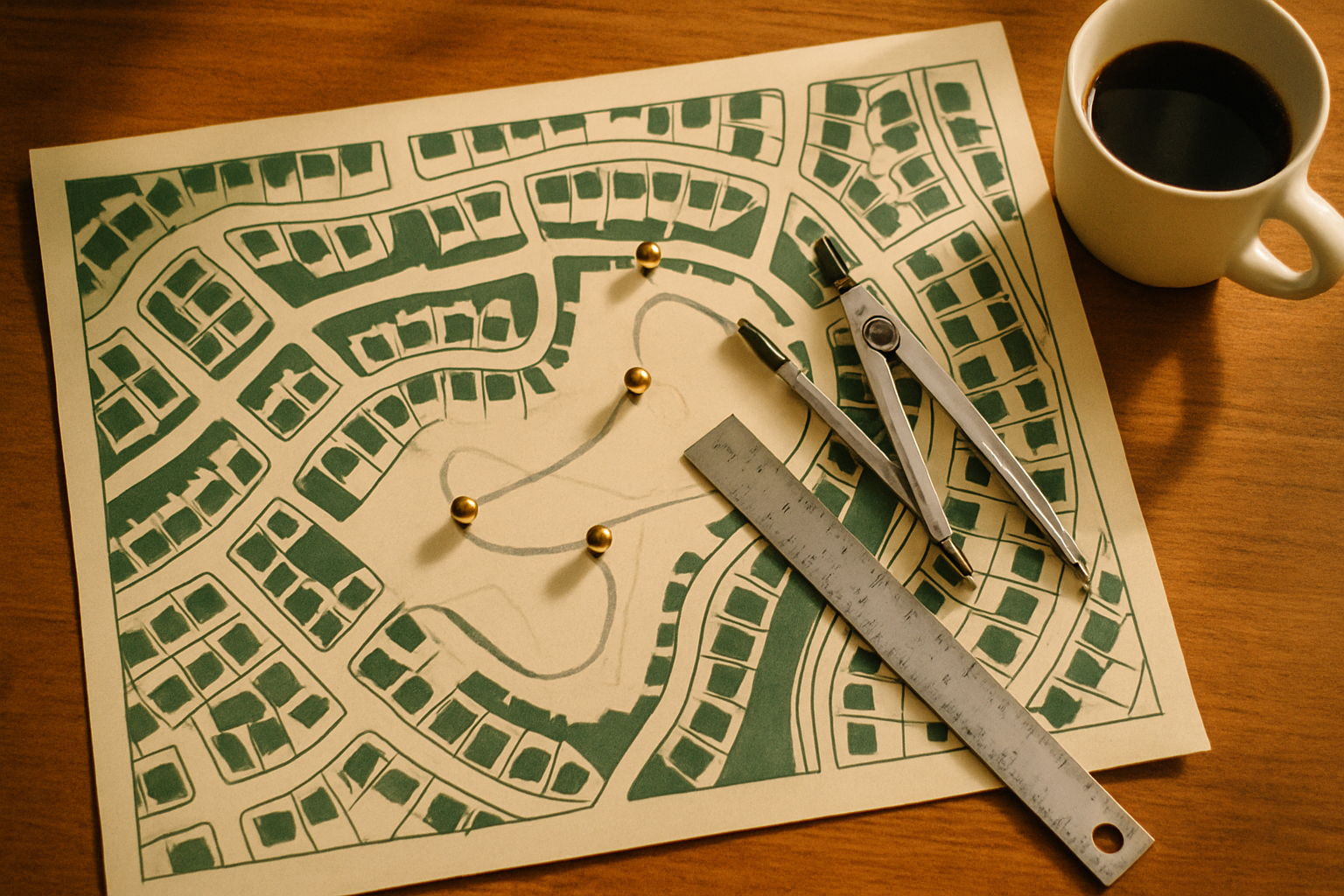
The single biggest operational move most Servicio shops make in their first 90 days on the platform is what we call the "one-Saturday re-route." Export your client book, plot addresses on a map, cluster by zip + zone, rebuild routes around density rather than chronology. Takes 4–6 hours. Pays back in 4–6 weeks.
With Servicio's route optimizer, the per-tech per-day part of this is automatic — nearest-neighbor + 2-opt on every tech's day shaves another 8–12% on top of the manual zone work. Together they routinely lift revenue/hr by 20–30%.
You do not need more clients. You need your existing clients on better routes.
When to break density for a reason
One caveat. A high-value commercial account at the edge of your zone is worth a detour most residential stops are not. $340 for an office park at 14 miles past your last residential visit is still a $220/hr run. Do not drop value clients to chase density numbers. Drop marginal residential that is 9 miles off the route and breaking even on drive time.